

South Africa is pouring substantial grants into regional bulk and water services projects, which is a once-in-a-generation chance to close the storage gap. Traditional methods, however, still cannot keep pace. Sequential construction is impacted by weather, curing delays and skills shortages. Critical quality factors such as compaction, reinforcement cover and dimensional accuracy stay exposed to uncontrolled site variables. The result is overruns, inconsistent watertightness and maintenance costs that municipalities can least afford.
These weaknesses are compounded by safety risks from prolonged work at height, limited contractor capacity for complex water-retaining structures, and an industry habit of prioritising lowest capital cost over whole-life performance.
Rethinking the blueprint through industrialised methods and a relentless focus on whole-life value is no longer theoretical. It is a practical engineering response already being applied on sites across the country.
“It aligns directly with the Institute of Municipal Engineering of Southern Africa’s (IMESA) conference theme of rethinking traditional infrastructure design, improving municipal procurement, incorporating new technologies and addressing service delivery constraints with limited resources. Corestruc is reimagining those blueprints judiciously through structural precast concrete and precision post-tensioning,” says Willie de Jager, Managing Director of Corestruc.
Rethinking traditional design
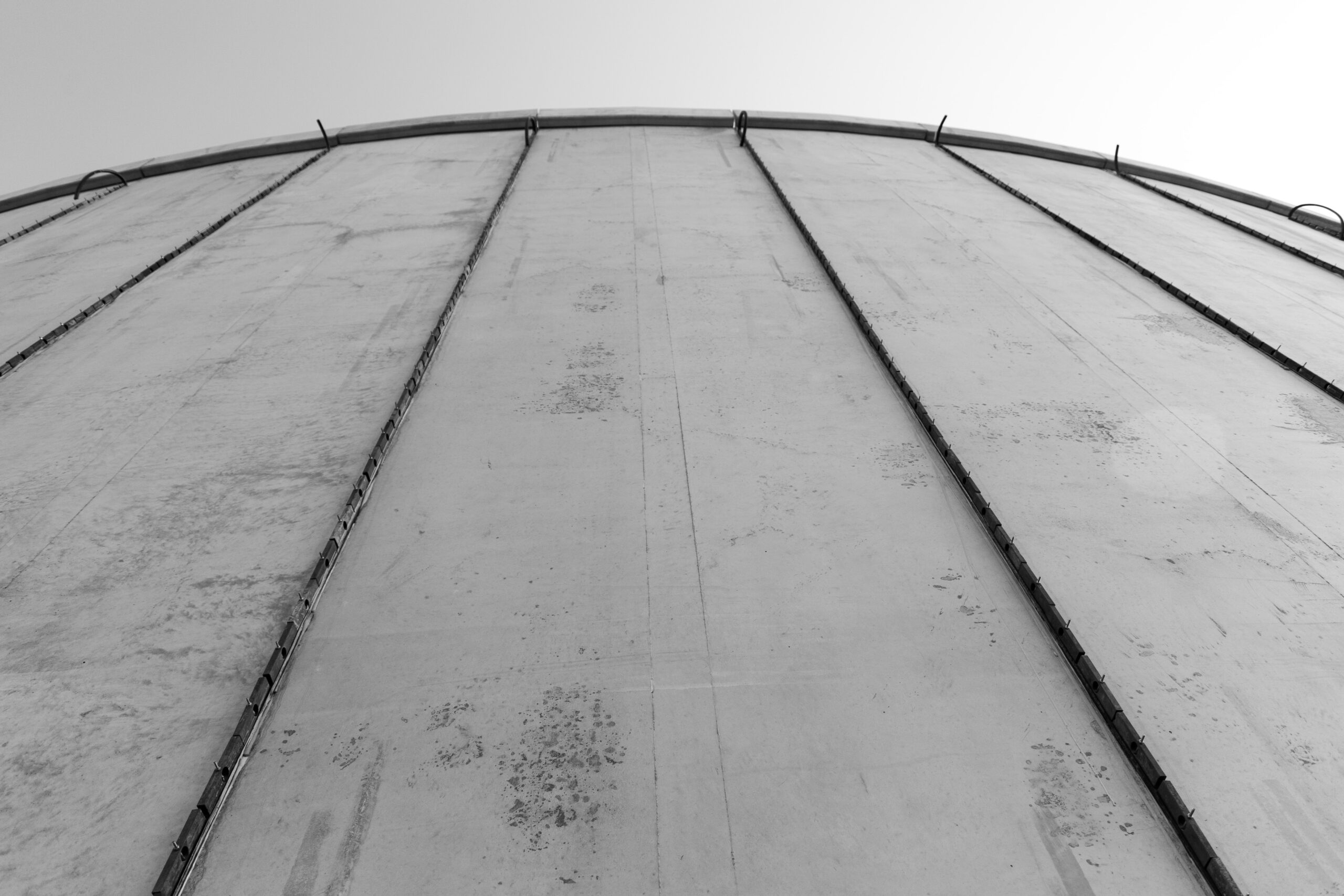
Corestruc’s precast post-tensioned system inverts conventional concrete construction. Wall panels, buttresses, columns, beams and hollow-core roof elements are manufactured under factory quality controls while earthworks and foundations proceed on site. Once foundations are ready, components are delivered, installed to millimetre tolerances, post-tensioned and grouted into a monolithic, permanently compressed structure.
Concrete performs best in compression. De Jager explains that post-tensioning places the wall into that state, sharply reducing tensile cracking risk and improving long-term watertightness. “Factory production delivers consistent concrete quality,” he elaborates. “This is through precise cover to reinforcement, controlled curing and verified dimensional accuracy. These results that remain difficult to achieve consistently on a conventional site.” The outcome is infrastructure engineered for 100-year service lives with lower maintenance demands.
Corestruc has already contributed approximately 600 ML of storage capacity across South Africa. The technology has moved from recovery projects that restored programme certainty on delayed schemes to proactive specification by major metros. The City of Ekurhuleni has completed multiple installations, and the City of Tshwane has adopted the system for new reservoirs. Early projects at KwaMhlanga and Bundu for Thembisile Hani Local Municipality confirmed structural integrity, watertightness and constructability under operating conditions, with measured behaviour matching design predictions. “Lessons from those sites have refined sequencing and post-tensioning procedures on every subsequent project,” De Jager says.
Technologies engineered to deliver
Targeted technological change, including industrialised manufacturing, digital surveying and engineered lifting, can deliver substantial gains without requiring contractors to overhaul their entire operations.
Automated batching, precise admixture dosing, controlled curing and comprehensive inspection before dispatch produce dense, low-permeability concrete of consistent strength and durability. On site, robotic total stations and purpose-designed lifting points achieve installation tolerances of 5 mm on columns and beams and 20 mm on roofs, minimising corrective work at height. Detailed lift plans, temporary stability engineering and sequenced erection further reduce risk.
“These are mature methods adapted to southern African realities,” de Jager says. “They account for long transport distances, variable access roads, differing contractor experience levels and the need for systems that local teams can install with available equipment.” Programmes are routinely shortened by more than 50%, with matching reductions in site costs, weather exposure and labour intensity.
Expanding capacity through smarter procurement
Municipal procurement must balance immediate budget pressures with long-term value. De Jager says that solutions that deliver faster construction, higher quality and greater durability frequently prove more economical over decades of service. “Faster delivery reduces financing and site overheads. Superior quality lowers future rehabilitation costs and non-revenue water losses. Predictable programmes help ensure communities receive infrastructure on time.”
The system also broadens participation. Large water-retaining structures have traditionally been limited to a small group of specialists because of the technical demands of watertightness, dimensional accuracy and temporary works. He says that precast construction lowers those barriers. “Principal contractors retain responsibility for earthworks, foundations and overall delivery. Corestruc supplies the engineered system, manufactures the components and oversees installation,” he says.
This collaborative model has enabled a growing list of contractors to deliver complex reservoirs successfully. Projects such as the Bundu scheme (the largest infrastructure programme ever undertaken by Thembisile Hani Local Municipality), the 30 ML Selcourt Reservoir and Tshwane’s first precast reservoir at Winterveld demonstrate the value of specialist partnership. De Jager says, “These collaborations expand the pool of capable contractors while supporting local employment and skills transfer. Knowledge moves with every project, building industry capacity rather than concentrating it.”
Doing more with limited resources
Municipalities face constrained capital budgets, skills shortages, ageing infrastructure backlogs and pressure to deliver visible results quickly. Precast post-tensioned reservoirs respond directly to these pressures. Parallel manufacture and site preparation compress programmes. Reduced work at height improves safety performance. “The safety-quality link is direct: fewer people working at height means less disruption and greater focus on precise installation, producing more consistent results,” notes De Jager.
Lower material waste; optimised concrete usage and extended service lives improve resource efficiency; and reduce environmental impact. “By using less material and delivering longer-lasting infrastructure, the approach supports sustainability objectives,” he says. This, while aligning with the National Development Plan, the National Water and Sanitation Master Plan and Infrastructure Asset Management goals. South African municipalities are increasingly considering these longer-term benefits when evaluating new water infrastructure solutions.
“When the construction method itself is re-engineered for control, speed and durability, limited resources stretch further and service delivery risk declines,” De Jager says.
A judicious path forward
Corestruc’s approach is to deliver the solution that offers the best long-term technical, operational and economic outcome for each project. This requires returning to first principles, verifying every design with both hand calculations and software, and subjecting first-of-kind systems to independent review. The company accepts full turnkey responsibility from design and manufacture through construction, commissioning and professional indemnity.
Seven years after the first installations, the system is mature, field-proven and continuously refined. Every project yields incremental improvements in design, sequencing and efficiency. As a family-owned business, Corestruc remains deliberately agile. It is able to invest in technologies that take years to gain mainstream acceptance while maintaining the accountability culture that underpins quality and safety.
These deliberate choices shape every project. “When those choices are made judiciously, municipalities gain more than storage capacity,” De Jager concludes. “They gain infrastructure completed on schedule, performing reliably for generations, and maximising the return on every public rand invested. That is the standard Corestruc continues to set.”